IT Talent: Technology Leaders with People Problems

Squirrels are great at foraging for nuts, building nests, and finding ways into my “squirrel-proof” birdfeeder (that’s not a picture of my personal birdfeeder, but it gives you the idea). But they’re never going to be great swimmers. Similarly, some leaders are never going to be great at managing people. So what do we do?

Goodbye Manager, Hello Individual Contributor

The most obvious answer is to shift poor people managers into individual contributor roles. With this solution, people aren’t forced to do something they can’t do well. At the same time, the company doesn’t lose their knowledge and experience.

There are two problems, however.

Handbook for Strategic HR: New Book Coming in November

I’m delighted to announce that November 28, 2012 is the release date for Handbook for Strategic HR: Best Practices in Organization Development from the OD Network.

This volume draws on the best thinking on strategic Human Resources from the chapter on Change Management.

Here’s the blurb about the book from Amazon:

The role of human resources is no longer limited to hiring, managing compensation, and ensuring compliance. Since the 1990s, a transformation has occurred. Companies are calling upon a new breed of HR professionals to behave as organization development consultants, helping to determine priorities in running the business, design how work gets done, craft strategy, and shape culture.

Talent Management for CIOs: Learning from IT Networks about Organizational Networks

Organization Network Analysis

“It’s not the technical stuff that worries me. It’s the people.”

I can’t tell you how many times I’ve heard this from IT leaders. They feel confident with the infrastructure, budgeting, project delivery, support, and project management aspects of their jobs. It’s the people stuff that does them in.

It’s not surprising. People are annoyingly complex, creative, and stubborn creatures who continually find ways to do new and interesting things (when you don’t want them to) or resist change (when you want them to change). However, most IT people already have a hidden asset to help them manage people: their understanding of networks.

The Most Important Positions In Your Company: Lessons from Organizational Networks

Every organization has a hidden system: a web of relationships and informal networks that people use to complete day-to-day work. This system has its benefits: it helps get things done, disseminate knowledge, and incubate innovation. However, most leaders are unaware of how these networks influence productivity or workflow. By ignoring human networks, leaders miss out on an important network dynamic that can make or break talent management and change initiatives.

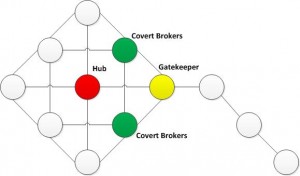
Within every network, 5 – 10% of nodes (in this case, individuals) represent critical connectors. These individuals have disproportionate influence over the whole. The critical connectors are:

Hubs – Highly connected individuals who communicate directly and frequently; Gatekeepers – Individuals who manage information flow between areas or around expertise; and Pulsetakers – Quiet, behind-the-scenes influencers who subtly lead and learn.

Who’s at Risk?: Evaluating Burnout through Organizational Networks

Burnout - iStock

It’s your turn to make the decision.

In this 1-page case study on Board Development, a nonprofit organization needs to find the rising stars among its volunteer pool and identify who’s at risk for being over-burdened. You have the volunteer structure, the volunteers’ work patterns, and organizational networks data.

Who do you think is at risk?

"Who Trumps How": How to Use Organizational Networks to Improve Succession Planning

Succession planning is a great idea. All too often, though, it fails to deliver on its promises by promoting the wrong person into the job.

The problem is that the people making the decision use the information they have at hand about the person’s knowledge, skills, and experience in the company. That sounds good, but it’s missing something important: the relationships.

People get things done in organizations through people. And if the relationships aren’t strong, the person won’t succeed.

Check out this quick slide show to see a story of succession gone wrong, and why, through the lens of organizational networks.

Is your strategy stuck in the 20th century?

Image of "Is Your Strategy Stuck in 20th Century"

Sign up to receive the two-document Strategic Resilience set and join our low volume list.

We’ll never share your information with anyone. Period.

* - required