The Times They Are A Changing… Always!: Five Elements of Successful Change Leadership
The pace of change shows no signs of slowing down. Globalization, hyper-connectedness, and immediate communication have changed the marketplace significantly and permanently. As a result, 81% of managers in one study report that the pace of change has increased compared to five years before. And 69% say that their companies experienced disruptive change within the last 12 months (AMA 2007).

We know that planned change initiatives, more often than not, disappoint. A McKinsey study reports that only 38% of change initiatives were completely or mostly successful improving performance (2006). So how do we make things better?

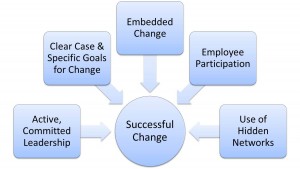
The Five Elements of Successful Planned Change

Active, committed change leadership.

Talent Management for CIOs: Learning from IT Networks about Organizational Networks

Organization Network Analysis

“It’s not the technical stuff that worries me. It’s the people.”

I can’t tell you how many times I’ve heard this from IT leaders. They feel confident with the infrastructure, budgeting, project delivery, support, and project management aspects of their jobs. It’s the people stuff that does them in.

It’s not surprising. People are annoyingly complex, creative, and stubborn creatures who continually find ways to do new and interesting things (when you don’t want them to) or resist change (when you want them to change). However, most IT people already have a hidden asset to help them manage people: their understanding of networks.

Five Tips for Strategic Planning That Works

Checkmate - Omer Unlu on flickr
Only 11% of executives strongly believe that strategic planning is worth the effort (Mankins & Steele in Harvard Business Review, 1/06). Yet, companies continue to plan year after year. Surely there must be a way to reduce the pain and increase the return on investment. This article outlines tips and techniques for improving the strategic planning process.

The Most Important Positions In Your Company: Lessons from Organizational Networks

Every organization has a hidden system: a web of relationships and informal networks that people use to complete day-to-day work. This system has its benefits: it helps get things done, disseminate knowledge, and incubate innovation. However, most leaders are unaware of how these networks influence productivity or workflow. By ignoring human networks, leaders miss out on an important network dynamic that can make or break talent management and change initiatives.

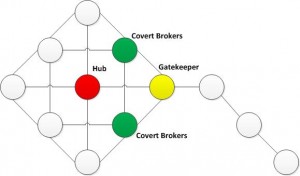
Within every network, 5 – 10% of nodes (in this case, individuals) represent critical connectors. These individuals have disproportionate influence over the whole. The critical connectors are:

Hubs – Highly connected individuals who communicate directly and frequently; Gatekeepers – Individuals who manage information flow between areas or around expertise; and Pulsetakers – Quiet, behind-the-scenes influencers who subtly lead and learn.

LinkedIn Isn’t Enough

“I’m on LinkedIn. Isn’t that enough networking?”

Truth be told: this question still makes me wince. But it’s a fair question. Awareness of networks is so new that, when we talk about networks, most people think of Facebook and LinkedIn. What’s the difference?

Facebook, LinkedIn, Twitter, and similar programs are tools that are used to help you interact with your network. You connect with colleagues, friends, and people who share interests with you (maybe you both “like” chocolate on Facebook or you both belong to the Linked:HR group). Facebook and LinkedIn give you pictures of your first degree of connection. LinkedIn also shows you your second and third degrees of connection.

Experiential Activity on Organizational Networks in the 2011 Pfeiffer Annual

For the last 40 years, the Pfeiffer Annuals have provided consultants with the latest thinking, approaches, and techniques in the field. Research and Markets, the world’s largest market research resource, has just added the Annuals to their online offerings. Partnering Resources is proud to have been featured in the 2011 Consulting Annual with the “Networks at Play” activity. This short, interactive, fun activity helps participants learn about organizational networks. More information about the Annual can be found here. For a free copy of the activity, contact us.

Your Turn: Did the Change Work?

Test Your Change Leadership Knowledge

It’s your turn to make the decision. Test your change leadership knowledge through this quick self-directed learning activity.

In this 1-page case study, the new Executive Director of a nonprofit organization needs to decide how well his change initiatives have been implemented and what his next steps should be. You have information about the change initiatives and data about how people collaborate.

Who’s at Risk?: Evaluating Burnout through Organizational Networks

Burnout - iStock

It’s your turn to make the decision.

In this 1-page case study on Board Development, a nonprofit organization needs to find the rising stars among its volunteer pool and identify who’s at risk for being over-burdened. You have the volunteer structure, the volunteers’ work patterns, and organizational networks data.

Who do you think is at risk?

Is your strategy stuck in the 20th century?

Image of "Is Your Strategy Stuck in 20th Century"

Sign up to receive the two-document Strategic Resilience set and join our low volume list.

We’ll never share your information with anyone. Period.

* - required