100+ Tried & True Problem-Solving Tools

Too many leaders choose the wrong tool for the problem at hand. Our infographic, “What’s Your Problem,” explains the four different types of problems leaders face. Once you’ve read it, you may be left thinking: OK, I know what kind of problem I have. What tool do I use?

In this post, we share over 100 tried-and-true problem-solving tools. These are effective and elegant methods that you can use to address the four types of problems.

Simple Problem-Solving Tools

SOP from UCLA.

Simple problems have easily seen cause and effect relationships. Your job is to assess the facts, categorize the facts, and then apply the appropriate best practice.

Are You Solving the Right Problem?

Problems come in many shapes and sizes. Some are small (“I can’t find space for my 2pm meeting”). Others are large (“I can’t get forty coalition members to agree on goals”). All have the capacity to drive you nuts, especially if you’re not solving problems using the right tools.

If You Have a Hammer, Everything is a Nail

Once you find techniques that work, it’s tempting to use them over and over again. Maybe you’ve had great success using Gantt charts. You might like performance charting, root cause analysis, or group dialogue sessions. Perhaps business ecosystem maps rock your world.

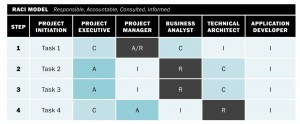
Every Exec Needs a RACI Model

“Even a thorough project plan can leave room for confusion about individual duties. A RACI model — or a visual map of everyone’s responsibilities — helps to prevent chaos from ensuing.” But how can leaders use RACI effectively? Partnering Resources founder Maya Townsend is featured in this Build magazine article on the ubiquitous RACI model.

The Power Five: Better Decisions through Strategic Questions

strategic questions

People are always looking for their magic wand: a miraculous tool that will immediately and painlessly improve the problem at hand. I haven’t found a magic wand yet. But this tool is the closest I’ve found so far.

The Power Five are five strategic questions that uncover expectations, assumptions, inter-dependencies, and impacts. They’re five of the best questions to use in any situation and bringing them into any decision-making, strategy, or planning conversation will improve the likelihood of a positive outcome.

The five questions are:

  • What is the goal?
  • Where are we now?
  • How will we get where we want to go?
  • An Open Letter to Project Managers, the New Rock Stars

    Project Managers are Rock Stars!

    First things first: Project managers rock. You grease the wheels, pacify the resisters, solve impossible problems, and keep things going when everyone else wants to quit. You save our butts every day, and I thank you for it.

    Here's the thing, though. You're shooting yourselves in the foot with the heroics. Yes, it's fun to play Superman or Superwoman and fly in at the 11th hour to save the day. You get that adrenaline high, and you feel like the company couldn't survive without you. Indeed, it can't.

    That is, of course, why it's time to change.

    Network Power: Tapping Hidden Social Networks to Accelerate Improvement

    Have you ever wondered how the grapevine affects improvement efforts? How a leader’s social connections support his or her success leading a quality effort? Whether you can make your next quality improvement effort more successful by tapping into social networks?

    Every organization has hidden networks of relationships that employees use in order to get work done, make decisions, and solve problems. These networks have been largely ignored by leaders, but hold the keys to improving performance and accelerating change. In this presentation, ASQ Worcester members learned how we can use hidden networks in quality and improvement efforts.

    Is your strategy stuck in the 20th century?

    Image of "Is Your Strategy Stuck in 20th Century"

    Sign up to receive the two-document Strategic Resilience set and join our low volume list.

    We’ll never share your information with anyone. Period.

    * - required